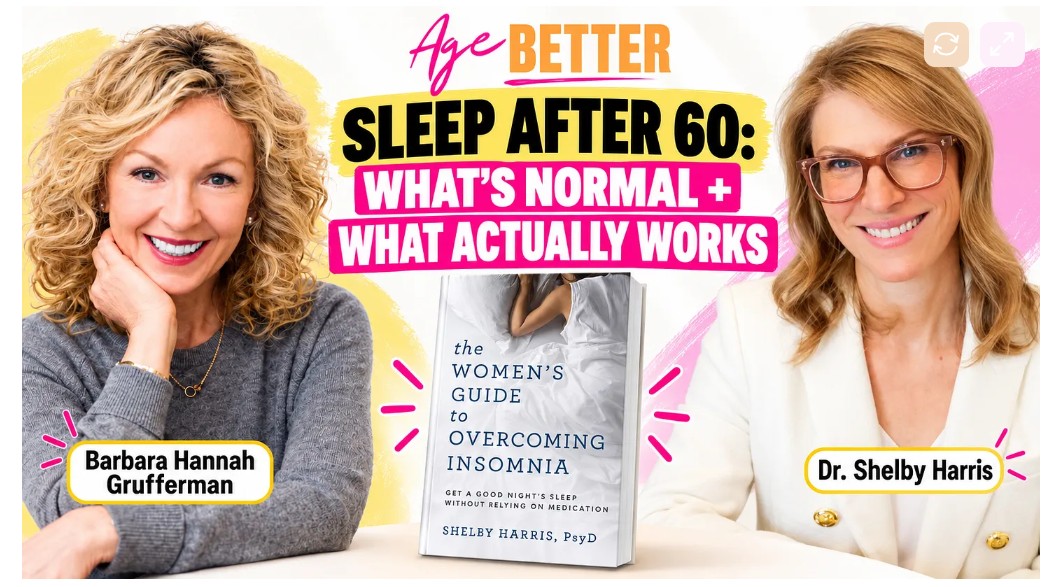
I’m actually a good sleeper. I fall asleep quickly and, most nights, I sleep pretty well. But now that I’m in my 60s, sleep is different. Lighter. A little more unpredictable. I wake up more often. Usually I roll over and go back to sleep. Occasionally my brain decides that 3:00 a.m. would be an excellent time to start the day.
Her answer was more reassuring—and more interesting—than I expected.
Yes, sleep changes. We tend to get less deep sleep, sleep becomes more fragmented, and our internal clocks often shift earlier. But the idea that we simply need much less sleep as we age? Not true. The National Institute on Aging says older adults still need roughly seven to nine hours of sleep each night.
And sleep is not a small thing when it comes to healthy aging. In 2024, about 30% of American adults reported sleeping fewer than seven hours a night, and women were more likely than men to report trouble staying asleep. Chronic short sleep has been associated with hypertension, heart disease, diabetes, depression and other health problems.
There’s also intriguing research around brain health. One study following nearly 8,000 people found that those who regularly slept six hours or less in their 50s and 60s had a higher risk of developing dementia later in life. That’s an association, not proof that too little sleep causes dementia—and certainly not a reason to panic after a bad night. But it is another reason to take persistent sleep problems seriously.
That was really the theme of my conversation with Dr. Shelby: don’t automatically blame age.
She pointed out that waking during the night is normal. In fact, we may briefly awaken several times as we move through our sleep cycles and never remember doing it. What matters is what happens next—and whether poor sleep is affecting how you feel and function during the day.
We also spent time talking about something women need to know: sleep apnea can look different in us. You don’t necessarily have to be an overweight man who snores loudly. Dr. Shelby sees thin, fit women with sleep apnea, particularly after menopause. Symptoms may be much subtler—pauses in breathing, little puffs of air, sleeping with your mouth open, or simply waking frequently and feeling lousy the next day. The NIH confirms that women’s risk for sleep apnea rises during and after menopause.
Then there’s insomnia itself.
Dr. Shelby specializes in CBT-I, cognitive behavioral therapy for insomnia, which she described as the first-line treatment for chronic insomnia. It isn’t just the familiar advice about keeping your bedroom cool or avoiding caffeine late in the day. CBT-I looks at the behaviors—and sometimes the thoughts—that can unintentionally keep insomnia going. In her practice, it may involve adjusting how much time someone spends in bed, dealing differently with nighttime awakenings, and challenging the anxiety that can develop around sleep itself.
One piece of advice was almost comically simple: if you wake up and become frustrated because you cannot fall back asleep, stop trying so hard. Get out of bed. Read, do a crossword puzzle, organize a drawer. Go back when you feel sleepy. The goal isn’t to make yourself sleep. That pressure can be part of the problem.
We also got into melatonin, magnesium, cognitive shuffling, sleep trackers—and why my beloved wearables may occasionally be giving me more information than I need. And because Dr. Shelby and I are both marathon runners, I finally got to ask why running for hours can leave you completely exhausted yet oddly unable to sleep.
But perhaps the line I keep coming back to is this one from Dr. Shelby:
“Don’t accept that your sleep is going to get worse as you get older.”
That doesn’t mean every 3:00 a.m. awakening needs a diagnosis. But maybe we should pay attention when sleep has truly changed, especially when we don’t feel well during the day.
Listen to or watch my full conversation with Dr. Shelby Harris on AGE BETTER. If sleep has become a little stranger lately, I think you’ll find this one especially useful.