The Invincible Brain: What If Your Brain Could Get Stronger With Age?

Small daily moves, big brain payoff. What’s not to like?
For years, many of us have been told some version of the same story: brain decline is inevitable. Maybe you’ve noticed more “Where did I put my phone?” moments. Maybe you’ve felt that fuzzy brain fog that can show up in midlife (hello, stress, sleep disruption, and yes—menopause). Or maybe dementia is one of those fears that sits quietly in the background.
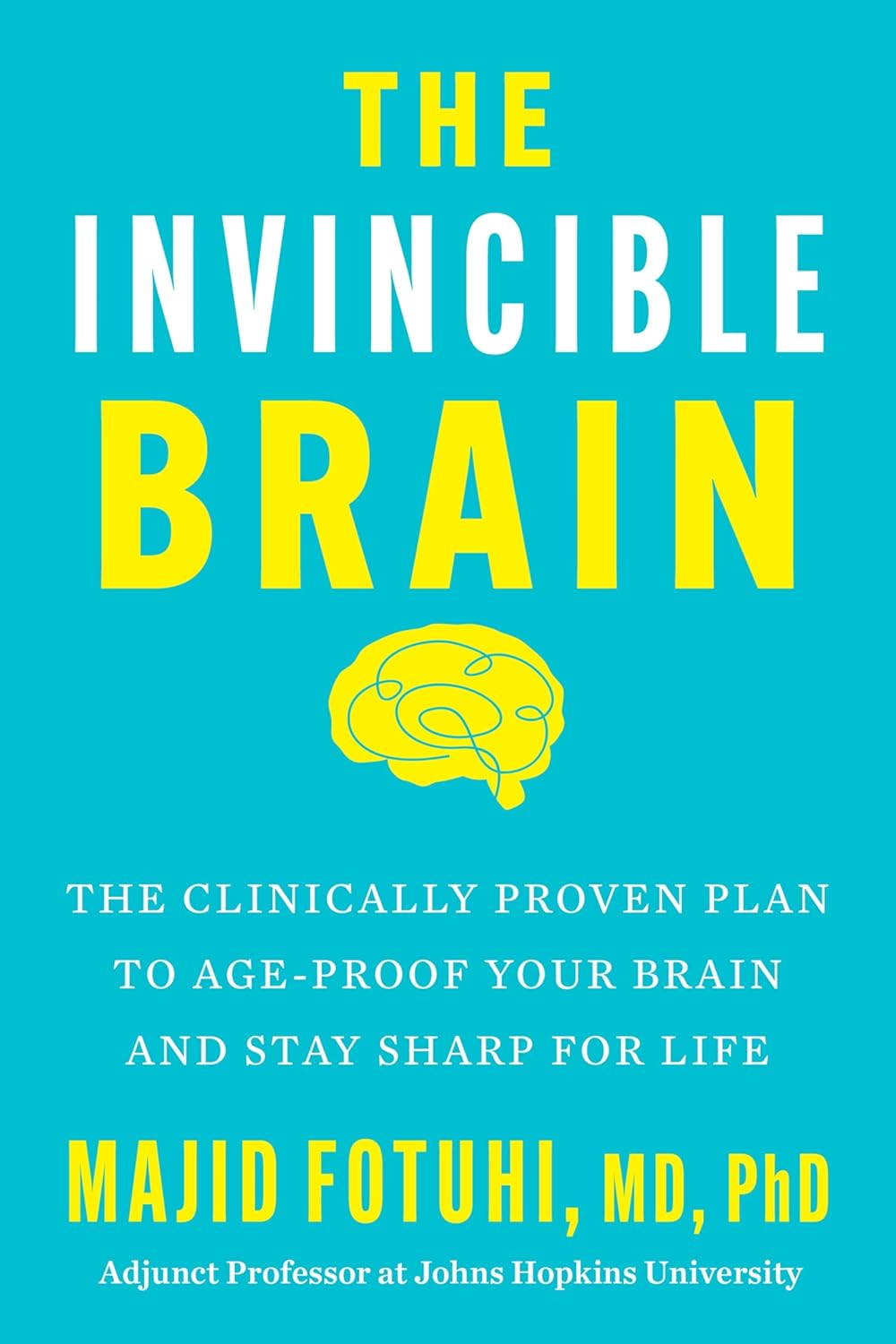
That’s why I wanted to bring you my newest episode of AGE BETTER—a conversation with world-renowned neuroscientist Dr. Majid Fotuhi, author of the new book The Invincible Brain.
“Our brain is more invincible than we think. Decline can be slowed and even reversed.” —Dr. Majid Fotuhi
This episode is also part of my Road to 70 series, where each month I sit down with a trusted expert to talk about one key area of healthy aging—so we can all take action now to feel stronger, sharper, and more in control heading into the next decade.
🎧 Listen to the full episode HERE
Dr. Fotuhi’s big idea: Alzheimer’s isn’t one simple disease
One of the most helpful frameworks Dr. Fotuhi shares is that what we call “Alzheimer’s” is often not one single problem with one single solution. Instead, he describes cognitive decline as more like a “soup” of issues that can build up over time—things like vascular problems, inflammation, poor sleep, metabolic dysfunction, chronic stress, and more.
And that matters because if there are multiple drivers, then we can also take multiple meaningful steps to reduce risk and support brain function.
The most empowering message: risk is not destiny
Dr. Fotuhi emphasizes something I know so many of us need to hear:
- Genetics are not your fate.
- Your daily choices can influence how your brain functions now—and how resilient it becomes over time.
He talks about epigenetics (how lifestyle and environment can affect gene expression) in a way that’s surprisingly easy to understand—and genuinely motivating.
If you’ve ever thought, “It runs in my family, so there’s nothing I can do,” this conversation will completely reframe that.
The “Invincible Brain” approach: 5 pillars that work better together
Dr. Fotuhi’s book is based on his highly regarded program, and it’s built around five pillars. I love this because it’s not about a single hack—it’s about building a brain-supporting system.
The five pillars:
- Exercise (he’s passionate about fitness as a brain protector—blood flow, growth factors like BDNF, and brain reserve)
- Sleep (especially deep sleep and “brain cleanup”)
- Nutrition (think anti-inflammatory, brain-fueling, metabolic support)
- Stress management / mindset (and how stress biology impacts memory and attention)
- Brain training (not just crossword puzzles—more like “cognitive cross-training”)
The magic isn’t doing one thing perfectly. It’s doing a few key things consistently—and letting them compound.
The science is changing fast: biomarkers and a more proactive future
We also talk about the newest era of brain-health testing—especially blood-based biomarkers that are becoming more available. Dr. Fotuhi explains what they can help reveal, what they can’t, and why a proactive brain-health approach should look more like cardiology: not one test, but a full picture.
And we discuss the newer Alzheimer’s drugs too—through a balanced lens: what’s promising, what’s complicated, and why lifestyle still matters enormously.
What I especially want you to take from this
If you do nothing else today, take this:
You don’t have to wait for a diagnosis to care for your brain.
You can start building cognitive strength now with daily habits that support:
- memory
- attention
- mood
- energy
- long-term resilience
And you don’t need to do it all at once. Start small. Start today. Keep going.
A quick “try this this week” Brain Boost (simple + doable)
If you want a starting point, here are a few smart moves Dr. Fotuhi’s approach supports:
- Move your body most days (even brisk walking counts)
- Protect your sleep like it matters (because it does)
- Eat in a way that stabilizes blood sugar (your brain notices)
- Lower stress on purpose (not when you “have time”)
- Challenge your brain (learn something new, stretch your attention)
Key links + resources
- Listen to the AGE BETTER episode with Dr. Fotuhi HERE
- Dr. Majid Fotuhi website HERE
- Dr. Majid Fotuhi / NeuroGrow Brain Fitness Program HERE
- The Invincible Brain (Amazon) HERE
- Dr. Fotuhi’s TED Talk HERE
- Documentary mentioned: Monster in the Mind (IMDb) HERE
If you’re new here, I’d love for you to subscribe to Age Better Cheat Sheet on Substack. It’s where I share trusted, practical takeaways—and the tools that make healthy aging feel more doable (and less overwhelming). And if you know someone who worries about memory or brain health, please share this post and the episode with them.

Barbara Hannah Grufferman
Barbara Hannah Grufferman is a leading voice for positive aging. She’s an award-winning writer and speaker, a frequent guest on national television and radio shows, and travels around the country giving talks about health, fitness, sex, style and small steps we can all take to live better, longer, happier lives.