A Short History of Ageism

From Aristotle to Kris Jenner
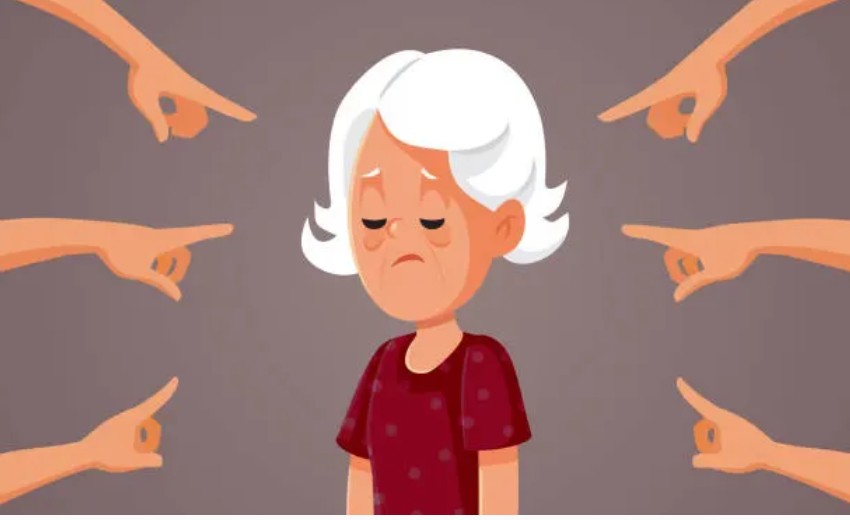
I just wrote a paper on ageism for a course in my doctoral program. Throughout last term, we had been studying the usual prejudices: sexism and racism. There’s lots of writing about those. But almost nothing about ageism though it has existed as long as man has grown old. My professor thought it was a great topic for a paper.
In fact, the term “ageism” was only coined in 1968 by Dr. Robert Butler, a rare early geriatrician. Even today, there are still very few geriatricians. He was the first director of the National Institute on Aging. The coining of the term happened spontaneously during an interview he had with the fledging reporter Carl Bernstein for an article in The Washington Post.
Reflecting on community resistance to a program to establish housing for older people of moderate income in Chevy Chase, Maryland, an upscale neighborhood bordering the District of Columbia, “I was struck,” Butler said, “by the parallel to sexism and racism in terms of negative attitudes toward age. ‘You know, it’s really an outrage,’ I told Carl. ‘It’s like racism, it’s ageism!’”
Bingo! Bernstein’s article the next day made the front page of the Post. The word ageism entered the American Heritage dictionary a decade later in 1978.
But since the Greeks, even our greatest thinkers have exhibited startling amounts of ageism. Aristotle, for one, was full of venom about the old. In a section of the Rhetoric, he called them “cynical…small-minded…suspicious…stingy…cowardly…feeble…” In fact, everyone throughout most of history sneered at the old. The exception: the few old men who retained power because they had money and property. Then they were given respect. But, if they like that old fool Lear gave up what they had, they became their daughters’ caregiving problem, ignored and mistreated.
And if things were bad for most old men, things were worse for old women. As Simone de Beauvoir wrote in her masterwork “The Coming of Age,” “Across civilizations, the old woman inspires fear, disgust, or derision. An old man still remains a man; but an old woman becomes something else entirely. She has lost her usefulness.”
And old women, considered ugly and frightening and usually alone, were often persecuted as witches. Though the witch was young and cute in the TV show of our youth and could light a fire with the twitch of her snub nose –– remember “Bewitched”–– thousands of old women were truly put to the flames for centuries just for being old and women.
But modern ageism is different and full of strange contradictions. We know there are more who are old than ever before. And if all it took for the old to be respected was money, our Baby Boomer generation is the richest in history with their paid-off homes, pensions, and 401Ks.
It should give them respect, right? But nowadays it seems that happens primarily when they use their money to look or behave as if they are young. Case in point: Kris Jenner and her famous $100,00 facelift. She was admired by many because she was upfront about wanting to look younger, did look good and had the money to indulge herself. Amazingly, face-lifted Kris has become a meme in India and China as a symbol of good fortune, success and female empowerment.
By the way, my professor was impressed that I could cite both Aristotle and Kris Jenner in a somewhat scholarly paper!
Another oddity of modern ageism: the old who through the centuries never were particularly critical of each other, now can be very judgmental about those who are not aging well. While aging has always been an inevitability, it’s increasingly seen as a condition that can be managed, optimized, and even, deferred.
This shift definitely marks a new phase in the history of ageism. Rather than stigmatizing old age simply as decline, aging itself has been reframed as personal responsibility. One can now even compete at aging. One can fail or succeed and be criticized and can criticize oneself for simply not aging well. Yes lucky us, that’s very much part of modern ageism.
But maybe what should be most concerning is that age discrimination is alive and well when it comes to the workplace. Nowadays there is no surprise in reading about or knowing people who are in their 80s or 90s. Many, many people are living that long. But age discrimination in the workplace can start far earlier in the 50s. In fact, a woman who works for one of the biggest tech companies told me recently, “they try to get you out by the end of your 40s.” Age discrimination is a problem everywhere but the industry that seems particularly age adverse is technology and increasingly technology is part of every industry. So, life can be very tough for men or, especially, women who loses a job in their 50’s and try to get another job with the same prestige or salary. Or even try to get a job at all.
I truly believe that the greatest achievement of humanity is the extension of human life. We have added 30 more years in America and increased lifespan everywhere. But it seems that modern ageism can demand too much of ourselves while demanding too little of society, industry and the health care system. Often they still ignore the most important reality of this century.
The world is growing old.

Myrna Blyth
Myrna Blyth is a New York Times bestselling author, longtime editor of Ladies' Home Journal, founder of More Magazine and recently the Editorial Director of AARP. During the pandemic, when many of us were making sourdough bread, Myrna earned a master’s from Johns Hopkins, and now at 86, is pursuing her doctorate at Georgetown. FOLLOW HER ON SUBSTACK.