
A Floral Afternoon Tea

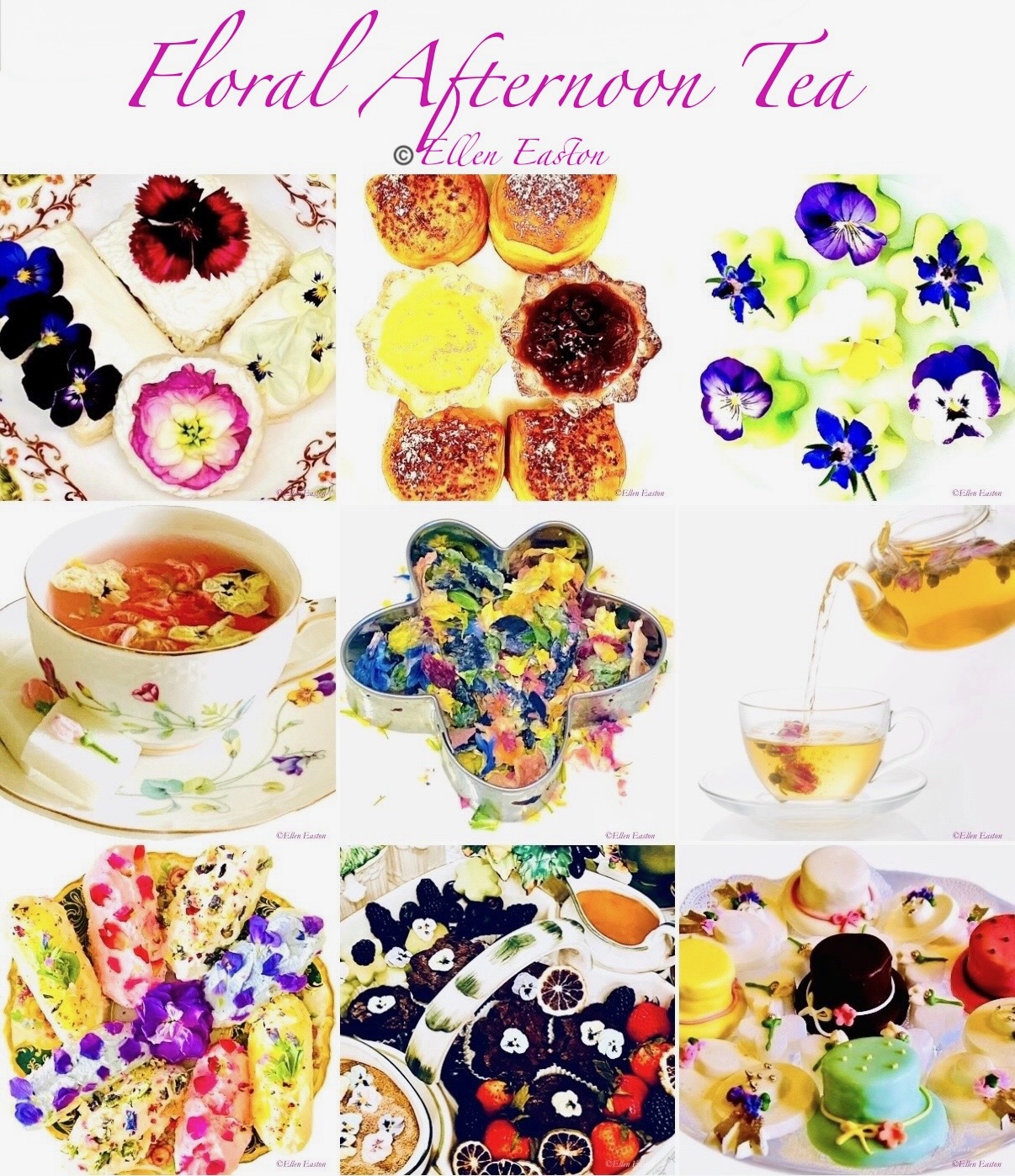
Edible flowers , once a favorite during the Reign of Queen Victoria, whether they be fresh, dried or crystallized are an elegant, delicious way to add beauty and color to your menus. Enhance tea savories or sweets, scones, biscuits, soups, salads, iced or hot teas with the blooms of your own preference and use other flavors sparingly as to not overpower the tastebuds.
How to Make Crystallized Edible Flowers
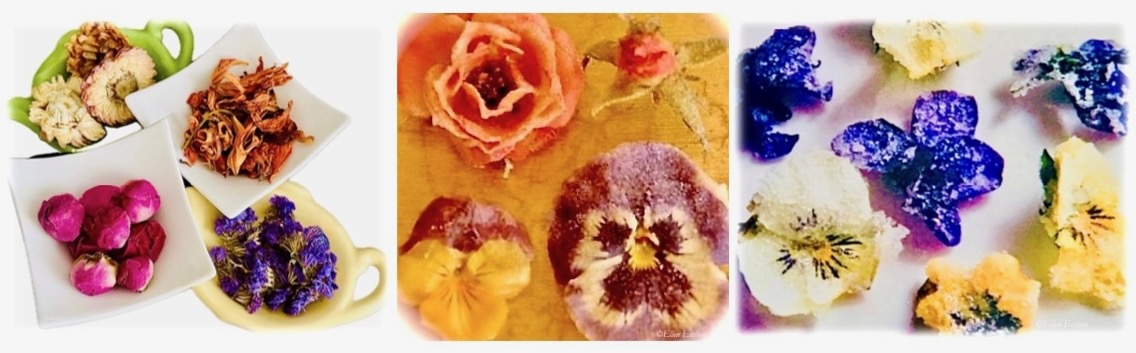
Recipe Notes: All edible flowers and herbs must be free of pesticides. Do not eat flowers or herbs grown wild, from florists, nurseries, or garden centers, as these flowers most often have been treated with pesticides not labeled for food consumption. The more fragrant the flower the tastier they will be in your recipes. Only eat the edible part of a flower and use sparingly to avoid any digestive issues.
Ingredients: Fresh, edible flowers or herbs | 1~large egg white, room temperature (only use pasteurized eggs), or powdered egg whites or meringue powder | Superfine sugar|
Wax Paper and paper towels to dry flowers | Wire rack covered with waxed paper |2 small to medium size shallow bowls |Optional ~ Small tweezers , Small fine-tipped paint brush
Preparation: if using pesticide free, home grown, cutting flowers, cut close to the stem base of the flower. Wash Flowers: rinse the flowers under a cool, slow stream of water and place onto a paper towel, gently pat out excess water to completely dry.
Egg White Mixture: To break the albumen down, place the egg white into a bowl and beat until frothy. Add a very little amount of water if needed to thin the egg to apply without clumping. If using powdered egg whites or meringue powder follow the directions on the packaging.
Applying Egg White to Flowers: Hold the flower using tweezers or your hands. Dip a small paint brush into the egg white. Apply the egg white carefully onto each flower or petal. Begin by coating the underneath side of the petals, then turn over and to apply to the topside of the petals. Thinly cover the flower or petal completely with egg white. When thoroughly coated with egg white, hold the flower or petal over the other bowl and gently sprinkle with superfine sugar evenly all over on both sides. If the sugar is absorbed after a few minutes, sprinkle again. Gently shake off any excess sugar. Repeat on all flowers or herbs.
Drying the Flowers: Place the coated flowers or petals on wax paper on a wire rack to dry. Allow to completely dry at room temperature 12 to 36 hours depending on the room humidity). Inspect the base and heart of the flower to check that they have no moisture. Flowers are completely dry when stiff and brittle to the touch. Store the flowers in layers, separated by wax paper, in an airtight container at room temperature until ready to use. Crystallized flowers may hold up to to one (1) year if properly stored away from light and moisture.
Sources:
Edible Flowers:
https://gourmetsweetbotanicals.com/
Recipe Links:
https://www.thethreetomatoes.com/roses-for-the-sweet
https://www.thethreetomatoes.com/a-rosey-table
https://www.thethreetomatoes.com/teatime-from-the-garden
©Ellen Easton

Ellen Easton, author of Afternoon Tea~Tips, Terms and Traditions(RED WAGON PRESS), an afternoon tea authority, lifestyle and etiquette industry leader, keynote speaker and product spokesperson, is a hospitality, design, and retail consultant whose clients have included the Waldorf=Astoria, the Plaza and Bergdorf Goodman. Easton’s family traces their tea roots to the early 1800s, when ancestors first introduced tea plants from India and China to the Colony of Ceylon, thus building one of the largest and best cultivated teas estates on the island.



Colors senses pleasure !!!Flowers flowers flower to say sweet things in a sweeter stare sugared to decorate anything we eat
We can eat them too! A rainbow of colors mix the pleasure of the eye looking at art composition and then eating it… making it a part of you… what a marvelous process Once again something new for us to do and rejoice thank you Ellen💖🎉💐Viva Creativity and exquisite taste
Thank you for your support!