
My NYC Jewish Friends Are Fearful — and I Am Fearful for Them

I wish Taylor Swift were writing this instead of me, because her voice could reach millions of young people who need to hear it. I am from a generation whose fathers and grandfathers fought in World War II to save the world from unthinkable evil. Images of Holocaust survivors being liberated from Nazi camps by American soldiers are seared into my memory. But generations have come after us for whom that history feels distant, abstract, almost unreal.
We are approaching the 25th anniversary of September 11, and there is now an entire generation born since that day for whom it carries little personal meaning. And this October 7 marks three years since the terrorist attacks on Israel and the murder of innocent Jews. Yet in New York City — a place that has always felt like a sanctuary of diversity — there is now a dangerous rise in antisemitism.
My NYC Jewish friends are fearful. And I am fearful for them.
I never thought I would have to say “my Jewish friends,” because I don’t categorize my friends. They are simply my friends. But in recent months, as antisemitism has become increasingly brazen in New York City, they have begun to share their fears.
I first heard it in the voice of a friend whose daughter was searching for pre‑schools for her granddaughter. There was a Jewish pre‑school nearby — one she had always planned on — but now she was afraid to enroll her child there.
Then, at a celebratory lunch, our usual chatter about Broadway shows and life suddenly shifted. Three of our Jewish friends spoke openly about their fear — fear of identifying themselves as Jewish, fear of speaking out, fear of being seen. One told us her son wears a Star of David ring, and she has asked him to turn it inward when he’s in public.
In all my years, I had never heard my Jewish friends talk about antisemitism.
My awareness of the Holocaust began when I saw The Diary of Anne Frank. I was Anne’s age. I didn’t just watch the movie — I felt myself inside it. Later, I read Leon Uris’s Exodus, and was in awe of the bravery of Israelis fighting for a homeland. Films like Sophie’s Choice and Schindler’s List reinforced the vow: Never again.
But now, for the first time, I am learning what it feels like to be Jewish when antisemitism rises.
One friend began an email chain among her Jewish and non‑Jewish friends. She wrote:
“I am concerned — maybe overly concerned — about the excess of antisemitism . I feel, as an older, proud Jewish woman, that I must share intelligent videos and writings to encourage people to think, revisit history, and show compassion for Jews during this horrible time.
But what I’m seeing is fascinating — rarely are Jews liking even a benign post. Some of my non‑Jewish friends do. I think Jews are scared. And some non‑Jews don’t want to get involved. Not evil — just indifferent.
Elie Wiesel said indifference is dangerous. I feel that too. I’m trying to be brave. But am I making a difference? Maybe nowhere.”
The responses she received were heartbreaking, courageous, and deeply human. Here are a few excerpts.
“Fear is an awful disease. Being afraid to stand up for who you are is not who we thought we were. I remember asking my mother why a man had numbers tattooed on his arm. I never forgot the image.”
“I am proud to be a Jew and will not hide. My family never hid, even when they suffered the consequences. I will not keep quiet if I hear hatred.”
“A doctor friend asked me, ‘When is the right time to leave?’ She compared today to Europe in the 1930s. I had never considered that. Hearing it gave me chills.”
“My parents were Holocaust survivors. They rebuilt their lives twice. Now I ask myself: Do you stay or go? Where do you go to be safe?”
“I met an older Israeli woman wearing a Star of David. She asked me, ‘Should I hide it on the subway?’ She’s from Israel — and she felt that way in NYC. It made me sad.”
It makes me sad too. And frightened. And determined.
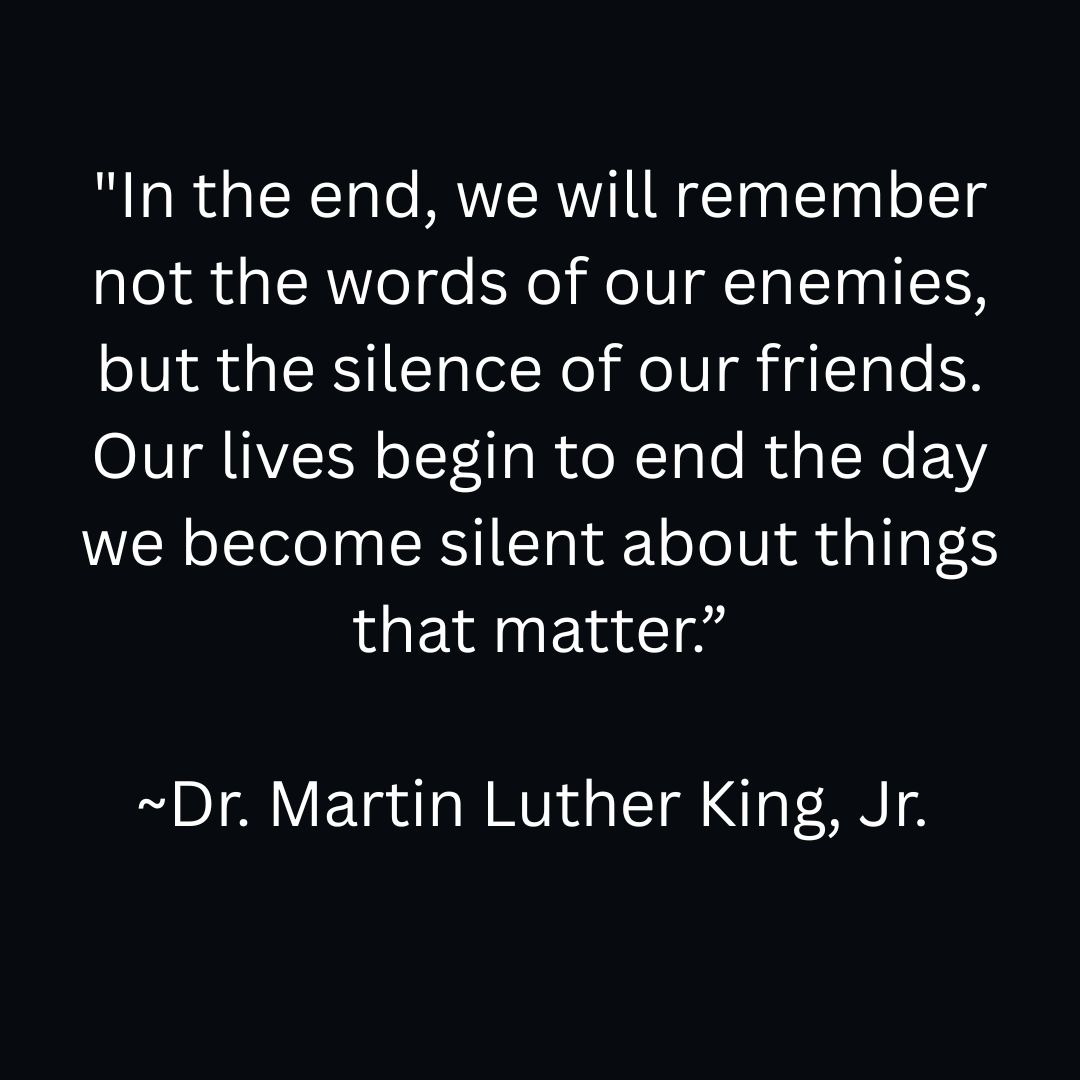
I don’t have the answers. But Martin Luther King Jr. said, “Our lives begin to end the day we become silent about things that matter.” Antisemitism matters. Humanity matters. Courage matters.
We need prominent voices — Jewish and non‑Jewish — to stand up and be counted. People like Robert Kraft, who has invested millions in combating antisemitism. Leaders like Michael Bloomberg, Bill Gates, Jeff Bezos. Filmmakers like Steven Spielberg, who understand the power of storytelling. Imagine if Taylor Swift and Travis Kelce used their platforms. Imagine if Marvel gave Spider‑Man a storyline confronting antisemitism.
We need schools and colleges to teach history honestly — not gloss over it.
And we need all good people, everywhere, to stand up against hatred, terrorism, ignorance, and all the “isms.”
Silence is not an option.

The tomato behind The Three Tomatoes.
Cheryl Benton, aka the “head tomato” is founder and publisher of The Three Tomatoes, a digital lifestyle magazine for “women who aren’t kids”. Having lived and worked for many years in New York City, the land of size zero twenty-somethings, she was truly starting to feel like an invisible woman. She created The Three Tomatoes just for the fun of it as the antidote for invisibility and sent it to 60 friends. Today she has thousands of friends and is chief cheerleader for smart, savvy women who want to live their lives fully at every age and every stage. She is the author of the novel, "Can You See Us Now?" and co-author of a humorous books of quips, "Martini Wisdom." Because she's lived a long time, her full bio won't fit here. If you want the "blah, blah, blah", read more. www.thethreetomatoes.com/about-the-head-tomato



Cheryl~ THANK YOU! This is the most powerful piece you have ever written. Brava!! It has brought tears to my eyes and determination to my soul to always not be one to live in fear of speaking out for the truth. I’m sending this to all I know. Xo, EE
Heartbreakingly true! Thank you Cheryl for using your voice. 💙🤍💙
Thank you Cheryl! I often ponder another quote by MLK: “Hatred cannot drive out hatred, only love can do that.” I think fear is actually a polarity of love. So in this instance I ask myself how I can love more and show my love. Thank you again for showing yours!
Kudos to you, Cheryl, for this brilliant piece on a very near, dear & important subject. I am fearful of this world we live in & applaud you for this writing.
Cheryl, thank you for this article. You have spoken up with moral clarity. So simple, and critically important at this challenging time!
Thank you so much for this article and your commitment to speak out!
I think also of MLK’s quote that “… hate cannot drive out hate – only love can do that.” I feel fear is in opposition to love. How can we love more? I look at the citizens of Minneapolis who chose to show solidarity and love for their immigrant neighbors instead of succumbing to the fear of ICE. How can New Yorkers and others show their solidarity and love? … Leaders who will do this are the leaders we need.
Thanks got voicing such a succinct opinion which speaks for all the tomatoes! It’s a very sad world if history is repeating itself!