Creatine for Midlife Women: Yay or Nay?

If you’ve been paying attention to health and wellness content lately, you’ve probably noticed one word popping up everywhere: creatine.
It’s suddenly the supplement everyone—from menopause specialists to fitness experts—is talking about. And not just for athletes or bodybuilders.
So naturally, I wanted to know: Is this real? Or just another trend that will fade away?
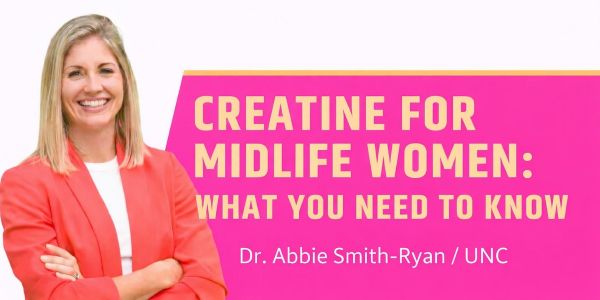
Instead of relying on social media takes, I went straight to one of the top experts in the country—Dr. Abbie Smith-Ryan, a leading researcher at the University of North Carolina at Chapel Hill who has done extensive research on creatine, especially as it relates to women.
And what I learned?
Honestly . . . it surprised me.
First, What Is Creatine (Really)?
Creatine is not some synthetic, mystery powder.
It’s actually a natural compound stored in your muscles that helps your body produce energy—specifically something called ATP, which fuels everything from your workouts to your brain function.
Here’s the problem:
As we get older—especially in midlife—our natural levels decline.
And that’s when things start to shift:
- Loss of muscle
- Lower energy
- More fatigue
- Brain fog
- Slower recovery
Sound familiar?
Why This Matters More Than Ever in Midlife
Dr. Smith-Ryan explained that creatine may help:
- Maintain lean muscle mass (critical as we age)
- Support strength and power
- Improve recovery from exercise
- Enhance brain health and cognitive function
- Reduce fatigue and brain fog
- Support bone health indirectly through muscle strength
And then she said something that really stuck with me:
“Creatine can improve lean mass, can help with cellular hydration, low risk and highly effective. Why wouldn’t you try it?”
Exactly.
But What About the Myths?
“Won’t it make me bulky?”
No.
That idea comes from how creatine has been marketed for decades—primarily to men focused on muscle building.
For women, especially in midlife, the goal is completely different:
Preserve strength, function, and independence.
Another concern? Bloating or weight gain.
Dr. Smith-Ryan made it very clear:
- Some women may notice slight water retention early on
- But this is cellular hydration (a good thing), not fat gain
And overall, creatine is considered very safe, with minimal side effects for healthy individuals.
So . . . Should You Take It?
- The most researched form is creatine monohydrate
- The typical dose is about 5 grams per day
- You don’t need to “cycle” it
- And it works best when combined with strength training or regular movement
But perhaps most importantly, this isn’t about optimization for athletes.
This is about something much bigger:
Protecting your healthspan.
Muscle is not just about how you look.
It’s about how you live—your mobility, your balance, your independence, your ability to do what you love for as long as possible.
Why I Wanted to Do This Episode
And like a lot of you, I wondered:
Is this something I should actually be doing?
That’s exactly why I wanted to have this conversation with Dr. Smith-Ryan—so we could cut through the noise and get real, science-backed answers.
No hype.
No trends.
Just what actually works.
Now, I am definitely on ‘Team Creatine’ and I take 5 grams a day. Easy peasy. I also made every woman friend and both my daughters watch the episode, too, so they can make educated decisions about their health.
Important note: creatine itself does not build muscle and strength. It gives you the added energy you need to push yourself harder to build that muscle. So don’t expect this to be a miracle powder. It is . . . but only if you put in the work.
Listen or Watch the Full Episode
We go deeper into:
- How creatine affects brain health
- What the research says about aging and muscle loss
- Who should (and shouldn’t) take it
- And how to get started in a simple, practical way
Listen on Apple Podcasts or Spotify
Or watch on YouTube
Let’s Build This Together
I want to hear from you.
Are you taking creatine?
Have you been thinking about it?
What questions do you still have?
Leave a comment here, reach out on social, or email me directly at agebetterpodcast@gmail.com.
Because everything I create for AGE BETTER starts with you.
And if there’s one thing I know for sure, it’s this:
We can’t control getting older . . . but we can absolutely control how we do it.
*****
This post shares general wellness information and personal experience with supplements. It is not medical advice. Supplements are not reviewed or approved by the FDA, and individual results may vary. Check with your doctor or healthcare provider before adding any new supplement to your routine.

Barbara Hannah Grufferman
Barbara Hannah Grufferman is a leading voice for positive aging. She’s an award-winning writer and speaker, a frequent guest on national television and radio shows, and travels around the country giving talks about health, fitness, sex, style and small steps we can all take to live better, longer, happier lives.