From Clicks to Connection: Why Real Communities Are Built, Not Bought

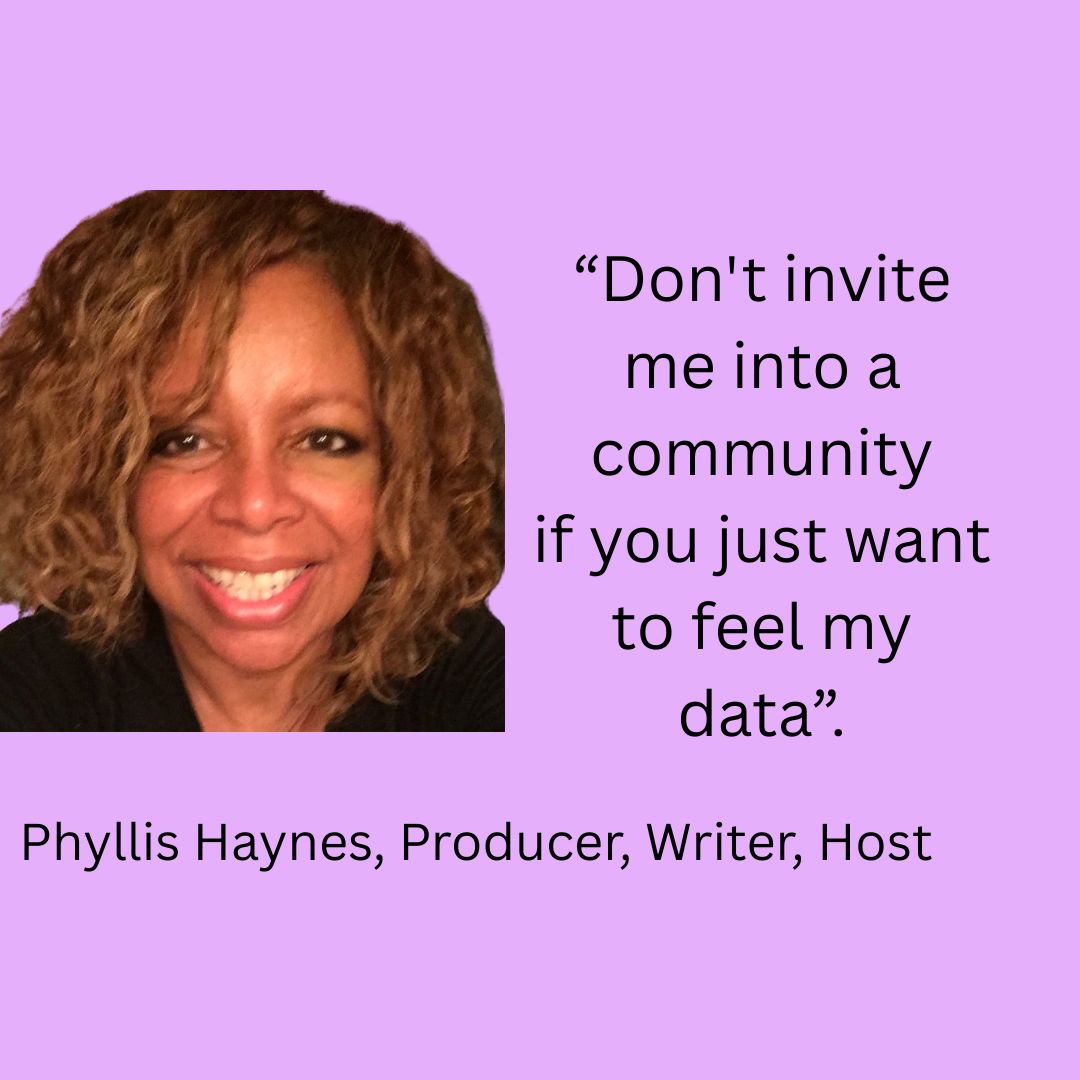
There is a big difference between building a community and growing an audience/email list.
Community definition:
“a social group of any size whose members reside in a specific locality, share government, and often have a common cultural and historical heritage. a locality inhabited by such a group. “Dictionary.com
“A community is a social unit with a shared socially significant characteristic, such as place, set of norms, culture, religion, values, customs, or identity. Communities may share a sense of place situated in a given geographical area or in virtual space through communication platforms.” Wikipedia
Time and again, I am invited into Facebook, LinkedIn, X groups of vendors, authors, and even product launches. They offer a tantalizing description of the alleged community of movers and shakers. They suggest you will be part of something big. It’s very similar to the promises offered by Scientologists, Jehovah’s Witnesses, and other zealots who used to greet me on the street or knock on my door. This time, the invites and offers come from various online communities.
Rarely do I experience “community.” Mostly, they just want my email to sell me stuff. They want me as a number. They don’t really want me.
There are some good communities.
Here are the hallmarks of community by my definition:
True communities offer a genuine practice of inclusion. Each person matters.
Communication flows vertically and horizontally in the community. It is not always from the top down. Members are encouraged to interact with each other, even if members are in a huge global group.
Members of the community are treasured and nourished even if they don’t fall in line.
Communication is shared among all facets of the community. One of the most annoying things to occur when one joins a group is to discover that there is an “in-group” that excludes everyone else.
Events, activities, and regular outreach are a feature of a good community.
How to build a community from scratch:
Size does not matter. A shared language of the heart is most important.
“If you talk to a man in a language he understands, that goes to his head. If you talk to him in his language, that goes to his heart.” Nelson Mandela
T-shirts with slogans, a secret handshake, or a unique call to order online may begin to create that feeling of identity and belonging.
Don’t do what cults do. They are strong communities because of shared rules, shared consequences, and charismatic and towering leadership. They manipulate members into belonging.
And don’t get hooked on the mission statement as the best way to create community.
Entrepreneur and now Canva Evangelist Guy Kawasaki describes a common mistake found in corporations:
“It’s not the mission statement”. I spent a lot of time in the corporate sector as a consultant and often companies spent a fortune on developing a mission statement and shoving that statement to the employees rather than engaging in real team building and having that mission statement tweaked and supported by employees giving them a shared commitment at every level of employment.”
A sure way to destroy a feeling of community, like getting passengers to feel like a community of enthusiastic consumers, is to create and advertise a mission statement that doesn’t match the reality of the consumer experience.
Airline employees rarely seem as friendly and warm as the actors in the commercials or the safety instruction videos. They all look like warm, engaging communities, but not so in the actual airports or on the airplanes.
It’s not too late to fix a broken or undernourished community.
Here are some tools:
Breaking bread in the virtual environment. In the virtual environment, you can create a warm shared greeting or opening conversation that allows people to share how they feel and how they are. Not everyone has to speak, but enough will help set a tone of mutual interest and concern.
Ritual of initiation. Autoresponders can be endearing if written well. The welcome into the community should be more than a single phrase, but rather something that lets the individual joiner online know that they have come into something special and,
“we look forward to your contribution.”
Bring me a pie when a family member or someone is sick. Obviously, in the virtual environment, you cannot bring a literal pie, although Amazon could. What is more important is the shared recognition that a member is ill and that there is concern beyond just the data point of how many attend the meeting.
Badges, T-shirts, and songs will help create engagement, but not offered as the whole approach.
Mutual recognition. “I see you and you see me.” Ultimately, that is the key to a strong community. Remember the old moving icons for the digital handshake in the old days when connecting to a computer. Sometimes you would see an image of a handshake.
Now we need to upgrade our invitations so that folks know they are really in the clubhouse and not standing outside the door while a salesman sells us stuff.
.

Phyllis Haynes
Phyllis Haynes, Producer Haynes Media Works, Writer, Speaker Producer and Host, Profonde.TV, Princeton Television Producer, Possible Futures. She is a 25-year on-air broadcast veteran in network news and public affairs reporting. She served as the host of "Straight Talk" for WOR-TV and reported on major issues for ABC Evening News with Peter Jennings and the number one morning show Good Morning America. She received awards for her original independent documentary work. The Daily News heralded her independent production of Aids: The Facts of Life featuring Susan Sarandon as a great learning tool. Her documentary received an award from the American Film Institute and Billboard magazine.