Why “Just Talking” Isn’t Connecting

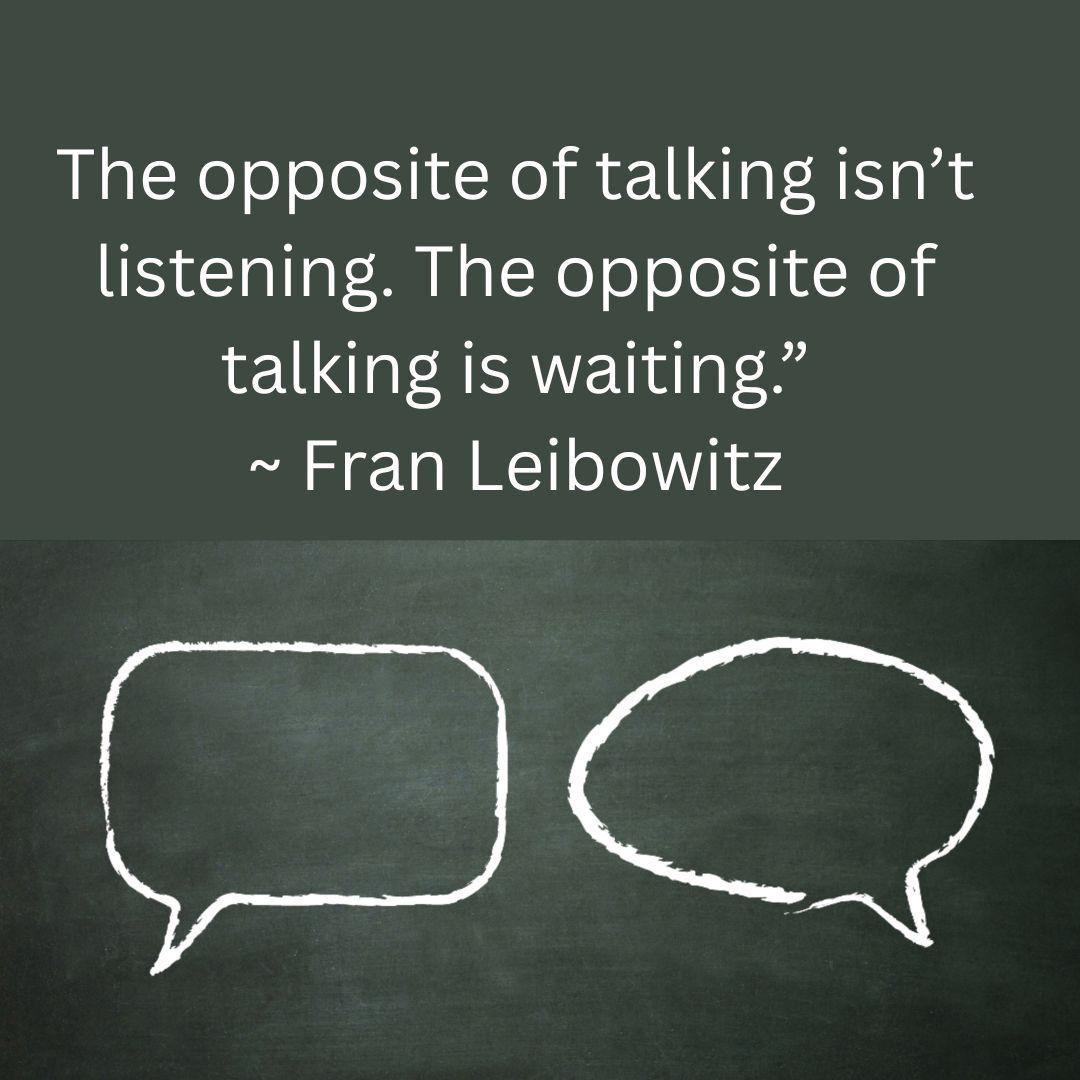
I was recently asked to give a speech on “effective communication”. When I pressed the conference organizers on what advice and outcomes their group was expecting, the response offered no clarification “Oh, just talk about talking,” was the baffling directive. (I stifled the urge to respond that I agreed they needed to learn effective communication!)
Without any direction for constructing my speech, I started thinking about what makes some conversations work and others not so much. A Jerry Seinfeld quip came to mind:
“A conversation is, by definition, two people talking.
But for most people, it’s just one person waiting to talk.”
Ever been with someone who “talked your ear off” and you never had an opening to speak? When verbal output is confused for conversation, the other party – YOU– is left “waiting your turn”, a frustrating experience that rightly feels nothing like communication. One party is deeply aware there is no give and take, while the other one doesn’t notice or care.
A true conversation makes space for connection by shared back and forth. That space is critical to provide each listener the bandwidth to hear, comprehend, and think about how to offer a response. You don’t need the perfect reply – you need the right pause.
Real communication isn’t just about what we say, but about how well we receive what’s being said. Only then is each speaker assured of having an equal investment in the conversation.
Small Talk and Beyond: How to Gently Shift into Real Conversation
Although small talk is sometimes maligned, it’s the warm-up for a deeper conversation. Even before — when a conversation stays light — your attentiveness can still leave a lasting impression.
To build a connection, what’s required is focus. Focus on the other person. Focus on what’s being said. And focus on taking meaning from what you are hearing.
Here are five tips that work for both small talk and ‘big’ talk:
- Provide visual cues to show that you are truly tuned in. Examples include making and holding direct eye contact, removing distractions if appropriate, and using open body language. Think of talking to a teenager, a spouse, an employee. In every one of these scenarios, visual cues will signal if you care about the conversation.
- Use the tone of your voice to signal interest. A friendly, engaged voice is much more likely to encourage your conversation partner to stay with you in the conversation than a dispassionate, disinterested one. I cringe remembering my teenage daughter saying to me: “Mom, you’re not even listening, I can hear it in the sound of your voice!”
- Don’t give a performance. Conversation isn’t about trying to impress. Real connection requires your presence, not a show. If you want to build trust and depth, the first step may be clever banter, but the second step must always include intentional listening.
- Share your objectives for the conversation. With small talk, you can say up front that you are delighted to have a few moments to get acquainted or to catch up. For a more serious conversation, reveal that you wish to share an idea, solve a problem or get advice. That way the listener knows your agenda; it’s okay to ask about theirs too.
- Avoid the temptation to fix, interrupt, or hijack. Give the person you are talking with a safety net to speak without judgment from you. Your stance should be one of learning, not anticipating your answer. When you anticipate, you get ahead of the speaker and may not be able to practice empathy if you are out in front before they’ve finished.
Conversation that Connects: I want to have one of those!
To be a more effective communicator, remember these cardinal rules:
- Listen to understand, not to reply.
- Always respond with warmth and validation which creates trust.
- Let silence do some of the work.
- Provide thoughtful follow-up – either in the moment, later or both.
- Don’t just hear the words—tune in to the emotion.
The best conversationalists are not ones who talk the most – they’re the ones who make others feel heard. I wish for you conversations that open up a path to genuine connection.
Let me know about your more effective communication techniques by writing to me at AnnLoudenCo@gmail.com. We are always a work in progress; I like learning from you!

A seasoned executive in the nonprofit world, Ann Louden is the founder and CEO of Ann Louden Strategy and Consulting. Recognized for her expertise in fund raising, high profile special events, and campaign planning, Ann provides counsel to chief executives, staff, and volunteer leadership.
Ann’s primary interest areas are education, health care for women and children, the arts, and adoption. As a cancer survivor, she led and was the twelve-year spokesperson for a breast cancer advocacy initiative that engaged thousands of survivors, volunteers and medical providers. With a mantra of bringing big ideas to life, Ann focuses on identifying a compelling vision and creating a goals-oriented plan for execution.
An in-demand national speaker for the Council for Advancement and Support of Education, Ann is the recipient of the Steuben Excellence in Teaching Award and has been named as a CASE Laureate. She is the author of the upcoming book: From Social Courage to Connection: Lessons from Leaders Who Change and Save Lives.
You can find her at www.AnnLouden.com.